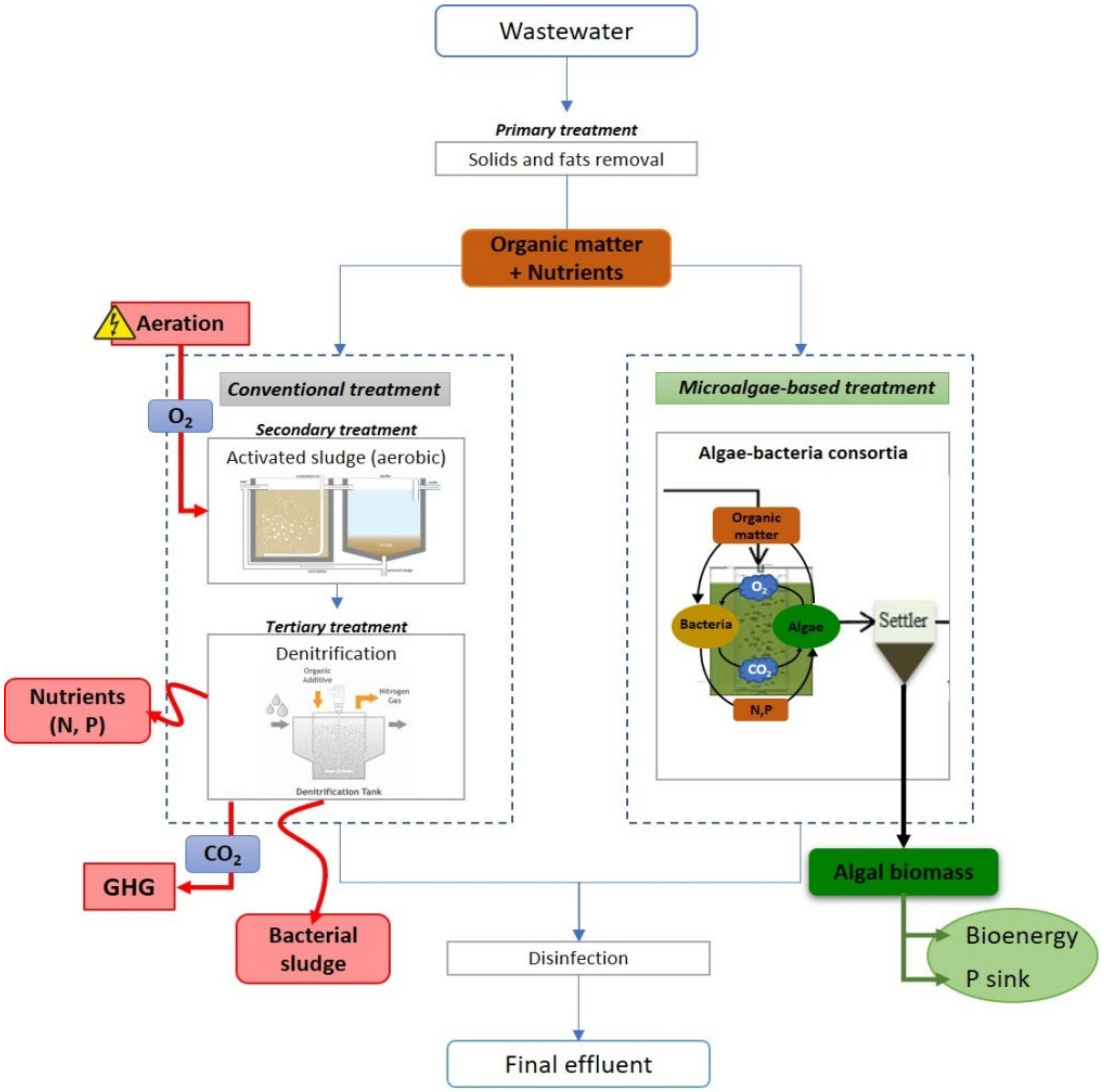
This review explores the use of microalgae to clean wastewater, which is or can be an eco-friendly and cost-effective method. Microalgae consume pollutants like carbon dioxide, nitrogen, and phosphorus, making the water cleaner. The microalgae can then be turned into useful things like biofuels and biofertilizers, contributing to a circular economy. The main challenge is making this technology economically viable. To tackle this, we need to look into using different types of microalgae and better bioreactors to scale up the process and understand to what extent is a viable solution. Overall, this approach can work well, but more research is needed on costs and LCA. It’s also important to ensure that the microalgae don’t contain harmful substances if they’re used for various purposes, like food and fertilizer, which can help feed a growing population sustainably.
“Figure 1. Conventional wastewater treatment versus wastewater treatment-based microalgae (Ferreira et al.,2019)” (Morais et al., 2021)